“Middle Housing in Eugene: Why We Need It and What We Can Do About It”
article by Samantha Roberts | Director of Business Advocacy, Eugene Area Chamber of Commerce & Will Fitzsimmons | University of Oregon Graduate Intern, published
April 13, 2022 https://www.openforbizeugene.com/middle-housing-in-eugene/
ADMIN NOTE: This article was published in 2022 in the Eugene Area Chamber of Commerce publication, Open For Business. The beginnings of Middle Housing were to expand opportunities for in-fill in all types of neighborhoods so folks who had the space and desire would be allowed to have some flexible choices about how they could use their property. We needed to add more homes, there was no question about that. Middle Housing was supposed to open up those possibilities and at the same time prevent urban sprawl.
We are now seeing the building emphasis move away from individual property owners adding a mother-in-law suite, an ADU, duplex or triplex on the back of their larger property lot. The infrastructure was already in the neighborhood. The streets already supported the traffic. It was a fairly efficient way to maximize productivity of space while removing some of the barriers that faces these homeowners in trying to make these changes to their home property. This is the type of in-fill we were sold on and supported.
Now we are seeing the focus shift to developers and nonprofits buying up multiple older properties or raw land to build what are more appropriately called complexes of multi-unit buildings nothing like the neighborhood they are located in. And many of these developments lean heavily on tax-payer funds to create the infrastructure from scratch rather than just building in areas that are already served by the types of infrastructure these developments require. Is there a better way to do this?
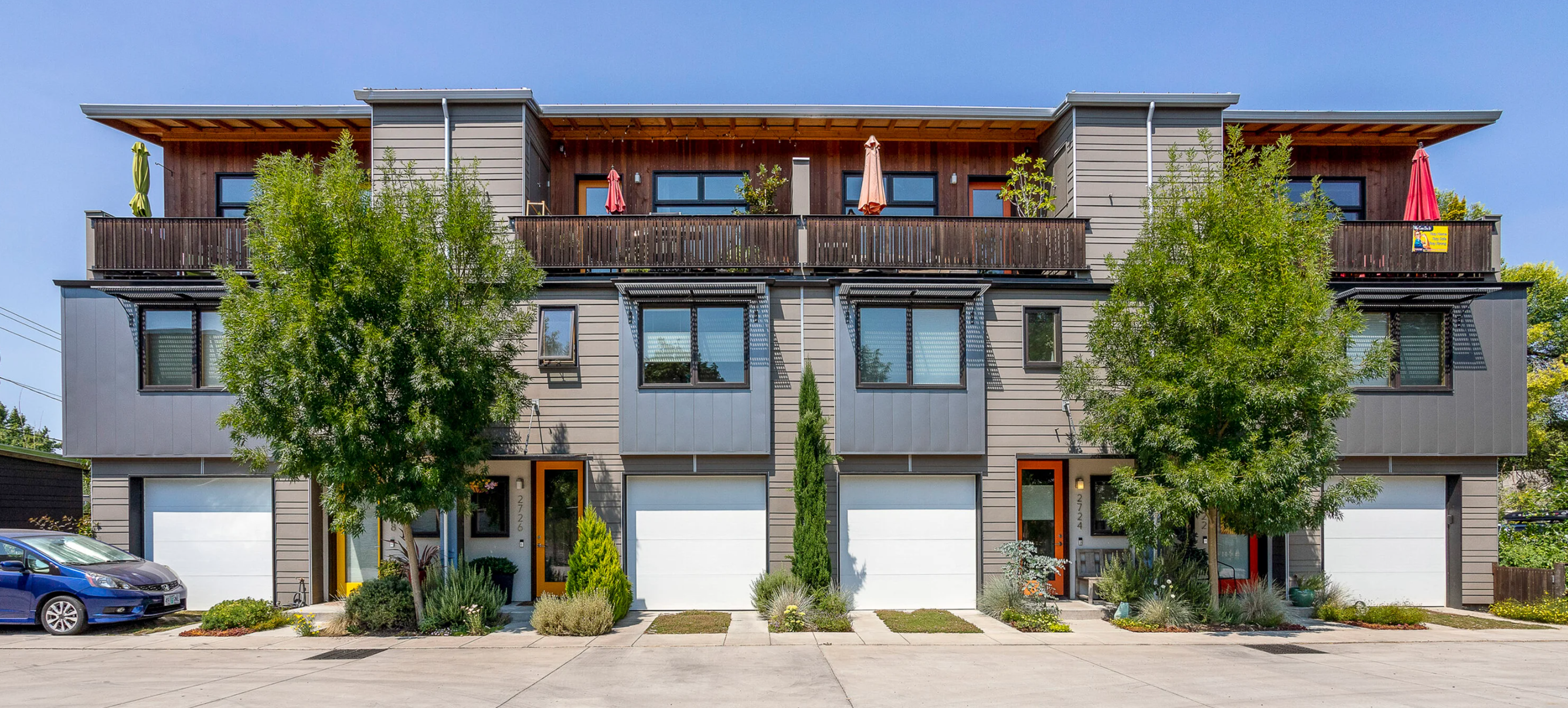
Middle housing is a type of housing, like duplexes, triplexes, quadplexes, cottage clusters, and townhouses, which can be built on more traditionally zoned single family home lots. The concept is to create a wider variety of home styles to match needs, price points, and preferences.
It’s no surprise that after many years of chronic under building, Eugene finds itself in a housing crisis. Making matters worse, since 2012, median gross rent has increased 32% while Eugene’s median sales price of single-family housing has increased from $180,000 in 2012 to $395,000 in 2021, an increase of 119% (City of Eugene Growth Monitoring Report, 2021). There are multiple factors influencing this lack of supply and affordability such as higher construction costs, Eugene’s growing population (which has grown faster than expected), and state and local restrictions on the creation of affordable units. Without adequate and affordable housing it is difficult for a growing community to keep pace with workforce development needs, talent recruitment, or general economic growth. A lack of affordable and available housing also leads to higher rates of homelessness–an issue that has major impacts on local businesses.
Yet, our community is one of innovators. Seeking to understand efficient and innovative ways to create more housing solutions, local partners like Better Housing Together looked at the growing concept of “middle housing.” Middle housing is a type of housing, like duplexes, triplexes, quadplexes, cottage clusters, and townhouses, which can be built on more traditionally zoned single family home lots. The concept is to create a wider variety of home styles to match needs, price points, and preferences. While our community grappled with this option, among many other communities in Oregon, the state codified the concept in 2019 through a bill called House Bill 2001. This bill requires large cities in Oregon, including Eugene, to allow these varied and nontraditional types of housing structures to be constructed in more areas to increase housing choice and supply. By state law, large cities in Oregon must have a code in place that meets the bill’s minimum standards by June 30, 2022, or else adopt the state’s model code.
This bill initiated a nearly 2 year long public engagement process on the part of City of Eugene staff which has been lauded for its inclusive, innovative, and thorough approach. This included the use of new types of engagement panels pulling together a greater diversity of voices not normally heard from in public process. This included many varied presentations directly to dozens of community groups and neighborhoods as well as open information sessions. Hundreds of local community members weighed in on the set of code amendments ultimately recommended by the Planning Commission to the Eugene City Council in January 2022.
The Chamber applauds the city’s extensive public involvement process which resulted in the Planning Commission Recommendation. Their recommendation has been tailored from the input of the Eugene community and our needs. Robust input, debate and compromise went into developing these recommendations that are now before Eugene City Council for adoption. Specifically the need for a diversity of housing types, lower-cost housing, flexibility for sites that are already developed, income-qualified housing, and transit-oriented development. The Chamber supports immediate implementation of the Planning Commission Recommendations for HB 2001 to address our housing shortage through a lens of inclusion and to avoid incompliance with the state, which would result in forced adoption of the model code.
Call to Action! (back in 2022)
Ahead of the June 30,2022 deadline, City Council will hold a public hearing for the proposed code changes–we need you to make your voice heard. While we understand the fears this can create around uncertain development changes, (any change to our neighborhoods can lead to uncertainty and concern), we also know that change is necessary to meet the current and future needs of our growing economy. These changes will provide a pathway to homeownership for a greater variety of people. These changes will provide more affordable housing for renters. These changes will be incremental and follow an iterative land use code process for development.
Most of all, these changes will allow for more housing choice, lower cost-housing options, development flexibility and incentives, and greater access to transportation options.
We hope you will join us and other organizations like AARP and United Way, to tell Eugene City Council to vote YES to the planning commission’s recommendations!
Sign up here to testify to City Council on April 18th at 7:30PM
Email your City Council that you support the Planning Commission Recommendations. We need workforce housing choice and affordability!
Published On: April 13, 2022
